
Learning to read with comics: do they really help?
Yes, comics can help children learn to read: they make children want to read and their pictures support understanding. But they go alongside learning the code, they do not replace it. Here is what studies say, how to choose a comic suited to your child’s level and how to read it with them.
Are comics real reading?
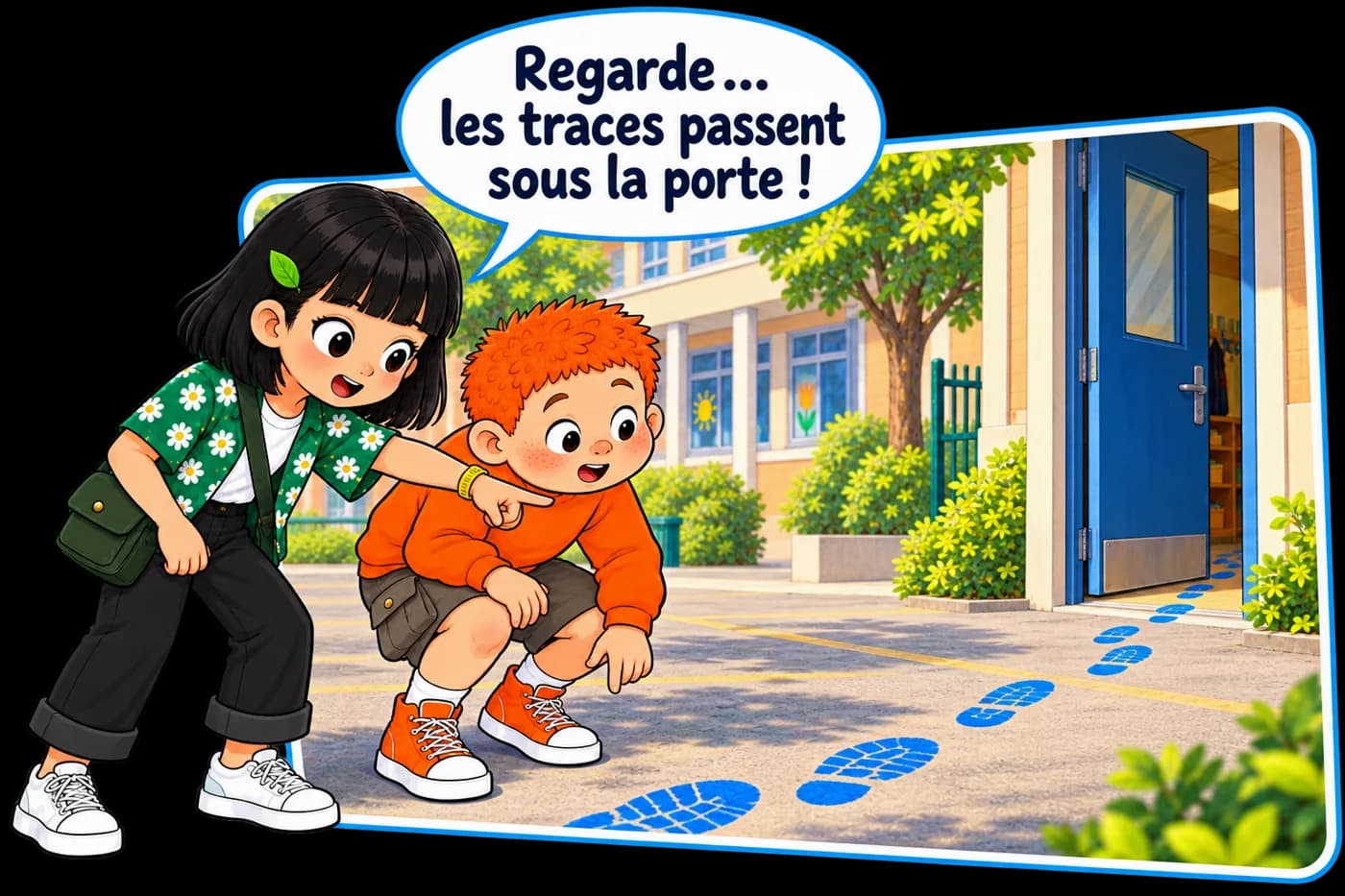
It is often parents’ first question, sometimes tinged with a little guilt: “They only read comics, does that count?” Yes, it counts. To read a comic, your child has to decode the words in the speech bubbles, follow the order of the panels, link what they read to what they see and work out what happened between two pictures.
That last point is far from trivial. Between two panels, a piece of the story is always missing: the character has run, the door has opened, night has fallen. Your child has to rebuild it alone. That is real comprehension work, close to what is expected of them with a text that has no pictures.
Comics are therefore real reading. It is simply reading that mixes text and pictures, and that calls for a few codes to learn.
What do studies say about comics and reading?
Comic readers enjoy reading more
In the United Kingdom, the National Literacy Trust surveyed 64,066 children and young people aged 8 to 18 in early 2023. Among those who read comics at least once a month in their free time, 58.6% say they enjoy reading, against 33.1% among those who do not. Comic readers are also more likely to see themselves as good readers (86.0% against 76.3%) and to read something every day (35.7% against 22.8%).
Take care to read these figures correctly: they show a link, not proof. Comics may give children a taste for reading, but children who already enjoy reading may also read more comics. The survey itself speaks of exploring possible links. It does not say that comics make a child a good reader.
In France, comics are young people’s favourite reading for pleasure
According to the study by the French National Book Centre (Centre national du livre, CNL), carried out by Ipsos in 2024 among 7 to 19-year-olds, comics, manga and comic books were growing among young people who read for leisure: up 4 points from 2022 and up 13 points from 2016. The 2026 edition of the same study states that, despite a slight dip, comics remain their first choice when they read for pleasure.
The context matters too. Again according to the CNL in 2026, 7 to 19-year-olds spend 18 minutes a day reading for leisure, against 3 hours 1 minute on screens. If comics are the door through which your child comes into reading, it is a door worth opening.
What are the benefits of comics for learning to read?
The pictures carry the meaning
When a child in CP or CE1 (the first two years of French primary school, age 6 to 8) still decodes slowly, they can lose the thread of the story along the way. In a comic, the picture helps them keep the thread: they see who is speaking, where we are, what the characters feel. The National Literacy Trust’s report in fact cites work on online comics suggesting that the sequence of pictures can improve understanding, by putting complex events back into context.
Text in small pieces
A speech bubble often holds one sentence, sometimes a few words. For a beginner reader, that is reassuring: the task looks doable, and each bubble read is a small success.
Wanting to turn the page
The rhythm of the panels, the suspense at the bottom of the page, the characters’ humour: everything pushes them to carry on. For a child who links reading with effort, this drive is precious.
What are the limits of comics for learning to read?
Comics are not a reading method. Learning the code (letters, sounds, syllables) happens at school, and comics come on top of it.
A few traps to watch for:
- Guessing instead of reading. The picture can push your child to make up the text. Check from time to time that they are really reading the words in the bubble.
- Capital letters. Many comics are written entirely in capitals, often less familiar to a child who mostly reads lower case.
- Sound effects and small print. “Bzzz”, “Bam”, words drawn into the scenery: fun, but not always readable for a beginner.
- Reading order. Some pages lay out their panels and bubbles in an unusual way, which can lose a young reader. And Arabic is written from right to left, while a comic in French reads from left to right: a child who also reads in Arabic, like many children in Tunisia, benefits from being shown the direction at the start.
Which comic for a 6-year-old or a child in CP?
For a first-reader comic, look inside before looking at the cover. Open the book at random and check for:
- readable lettering, ideally in lower case;
- little text per panel, and well separated bubbles;
- large panels, and not many per page;
- a short story, one you can finish in one or two sessions;
- a subject that really draws them in: animals, adventure, humour, football, whatever it is.
A simple test: ask them to read a bubble picked at random. If they stumble over many words, keep the comic to read together rather than alone. In CE1 and CE2, they will be able to move on to longer stories. In CM1 and CM2, denser books and series come within reach.
How to learn to read with a comic at home?
- Leaf through it together before reading. Look at the cover and a few pages: “What do you think it will be about?”
- Explain the reading order. Point with your finger: panel by panel, left to right and top to bottom, then the bubbles in the same order.
- Share the parts. You read the narrator, they read a character. Change your voice, exaggerate a little: it is a game.
- Pause on a panel. “What happened between these two pictures?”, “Why does he look like that?”
- After reading, have them retell it. “Tell me the story in three sentences.” Then choose a new word together and find out what it means.
When they stumble over a word, give them a moment. Then help them break it into syllables rather than reading it for them. To go further on these shared reading moments, see our article on reading aloud every day.
My child does not like reading: can comics make them want to?
If your child refuses books, comics are often the best way in. Just avoid presenting them as a step before “real” books: they would hear that what they love does not count.
A few encouraging phrases: “Will you tell me what happens in your comic?”, “Can I read with you?”. A few phrases to avoid: “Read a real book instead”, “That’s not reading”. We give more ideas in the article My child does not like reading: 7 tips to make them want to read.
When to talk to the teacher?
If, even with a very simple comic, reading stays very laborious for your child, if they avoid all reading or lose heart very quickly, talk to the teacher. They see your child read every day and can tell you what they observe. If needed, then talk to the doctor, who can refer you to a speech and language therapist.
Frequently asked questions about comics and reading
Does a comic count as reading?
Yes. Your child decodes the words in the bubbles, follows the order of the panels and pieces together what happens between two pictures: it is real reading and comprehension work.
Do comics really help children learn to read?
They help keep the taste for reading and their pictures support understanding. But they do not replace learning letters and sounds, which happens at school, and surveys show a link between comics and enjoying reading, not proof.
Which comic for a child who is starting to read?
A comic with clear lettering, in lower case if possible, little text per panel, large panels, a short story and a subject that draws them in. If they stumble over many words in a bubble picked at random, read it together.
What if my child only wants to read comics?
Let them, and read some with them. Avoid presenting comics as a step before “real” books: they would hear that what they love does not count.
And where does Kalimo fit in?
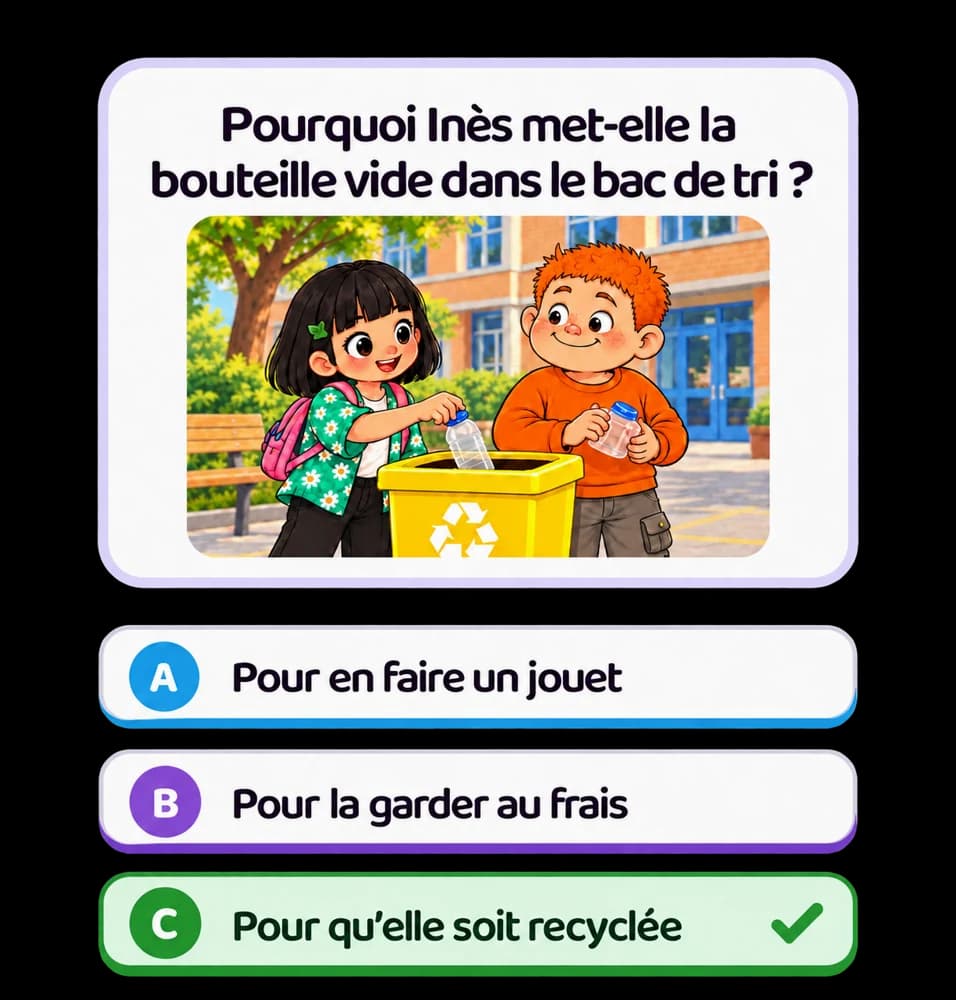
Kalimo is a French reading app for children aged 5 to 10, built around illustrated stories in comic form. Each school year has its reading world, from CP to CM2, written to follow the progression of reading at school.
Your child reads the page aloud and a tutor listens: every word read well turns green. A word misread, skipped or left silent turns yellow, and the next word lights up. The tutor never blocks them and never says the word by itself; your child can, if they wish, tap a word to hear it. Listening needs an internet connection, and no recording of their voice is kept.
After each story, a comprehension quiz and games around the story’s words carry the reading further. Kalimo has no advertising and is coming soon to the App Store and Google Play. You can already create an account on the website.
Sources
- National Literacy Trust, “Children and young people’s engagement with comics in 2023”, 2024. https://literacytrust.org.uk/documents/6234/Children_and_young_peoples_engagement_with_comics_in_2023.pdf
- Centre national du livre et Ipsos, « Les jeunes Français et la lecture », communiqué de presse, 2024. https://centrenationaldulivre.fr/sites/default/files/2024-04/Les%20jeunes%20Fran%C3%A7ais%20et%20la%20lecture%202024%20-%20Communiqu%C3%A9%20de%20presse.pdf
- Centre national du livre et Ipsos bva, « Les jeunes Français et la lecture », communiqué de presse, 2026. https://centrenationaldulivre.fr/sites/default/files/2026-04/%C3%89tude%202026%20-%20Les%20jeunes%20Fran%C3%A7ais%20et%20la%20lecture%20-%20Communiqu%C3%A9%20de%20presse.pdf